Crews You Can't Hire, Work You Can Offload: Precast as a Workforce Strategy for US Contractors
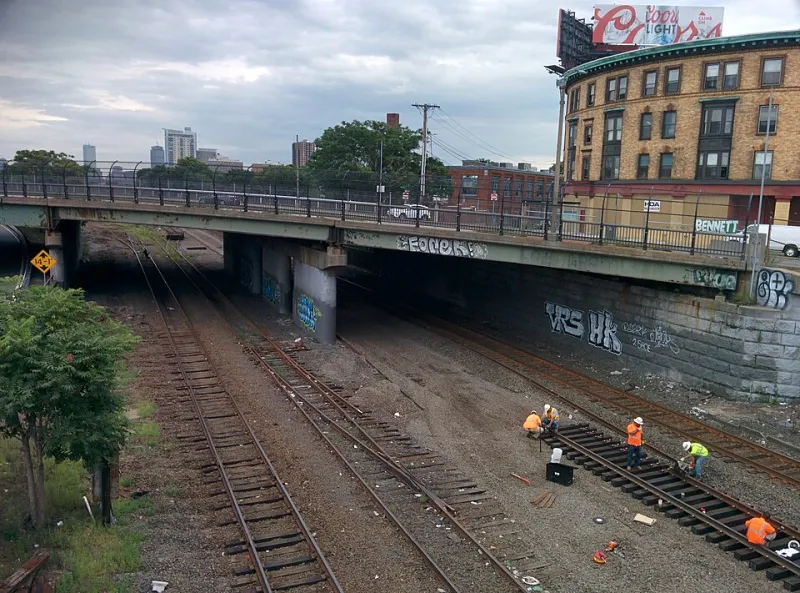
Photo: 4300streetcar, CC BY 4.0, via Wikimedia Commons
There is a temptation in the US construction industry to talk about the skilled labor shortage as though it were weather: unpleasant, temporary, and eventually someone else's fault. It is neither temporary nor accidental. It is a structural condition produced by a generation of retirements, an apprenticeship pipeline that never scaled to replace them, and a project pipeline that keeps asking the same shrinking pool of carpenters, ironworkers, and finishers to do more.
The industry's standard responses — signing bonuses, per-diem, aggressive subcontractor stacking — treat scarcity as a recruiting problem. It is more usefully treated as a design problem. If the trade hours are not available, the correct question is not how to hire more of them but which of them can be moved somewhere the labor constraint does not bind.
That is the argument for precast, and it is a stronger argument than the usual one about speed.
The Shortage Is Structural, Not Cyclical
Forecasters differ on magnitudes, but the direction of the data has been consistent for years. Industry capacity models routinely project a shortfall in the hundreds of thousands of additional craft professionals needed to meet expected construction demand, and the median age of several key trades has climbed steadily. The trades most affected — reinforcing steel, formwork, concrete finishing, welding — are precisely the trades a cast-in-place structural package consumes in volume.
Compounding the supply problem is geographic immobility. A big commercial project in a growing metro competes for labor not only with other projects in that metro but with every project within commuting distance. When a data center campus, a hospital tower, and a stadium are all hiring ironworkers simultaneously, the labor market does not clear through price alone. It clears through delay.
Contractors who plan as though the labor market will clear on their schedule are building a schedule around an assumption that has not held for several years running.
What Off-Site Fabrication Actually Removes from the Site
It is easy to describe precast as transferring work — and harder, more useful, to be specific about which work leaves. Moving structural production to a manufacturing facility removes from the site, among other things:
- Formwork erection, stripping, and cycling, along with the carpenters who perform it.
- Reinforcement placing and tying in the structural frame.
- Concrete placement, vibration, finishing, and curing under ambient conditions.
- The crane time consumed by moving formwork and materials into position at height.
- The inspection and rework loops that follow field-cast defects.
What remains on site is assembly: setting elements, making connections, placing grout or topping, and closing out the interfaces. That is skilled work, and it is not nothing. But it is a fraction of the trade hours — and it is work that a smaller, more senior crew can execute reliably.
There is a second-order effect that rarely appears in cost comparisons. When a site's peak labor demand drops, the contractor's exposure to the local labor market drops with it. A project that needs forty ironworkers to hit a schedule is hostage to a market in which forty ironworkers may not exist. A project that needs twelve is merely constrained.
Quality Does Not Degrade When It Leaves the Site — It Becomes Inspectable
A fair objection: does not fabrication at a distance simply relocate the quality risk somewhere harder to supervise? In practice the opposite tends to hold, provided the specification is written correctly.
Plant production places reinforcement, cover, embed location, and concrete performance under a documented regime measured against tolerances rather than judged against appearance. Casting in a controlled environment removes the temperature, wind, and moisture variables that make field-cured concrete a seasonal gamble. And an element that fails inspection in a plant can be recast before it ships — a remedy that is expensive but available, whereas the same defect discovered in place at height is a repair with a schedule tail.
This is not an argument that offshore or off-site work requires less oversight. It is an argument that the oversight changes shape: from watching hours being spent to reviewing records being produced.
The Counterarguments, taken seriously
Three objections deserve a direct answer.
Coordination load shifts to the contractor. True. Precast demands earlier design freeze, tighter embed coordination, and disciplined shop drawing review. That is real added engineering effort. It is also front-loaded effort, and front-loaded effort is the kind that a lean team can actually staff, because it does not compete with field execution for the same people.
Erection crews are themselves scarce. Also true, and it argues for sequencing that flattens erection peaks rather than concentrating them. A supplier that can deliver on a steady cadence, rather than in three overwhelming waves, converts an erection labor problem into a logistics plan.
Small projects cannot absorb the coordination. Largely correct. Precast pays its workforce dividend on repetition — enough elements, enough floors, enough identical bays to justify the design effort. Below that threshold, cast-in-place remains sensible.
A Strategic Allocation, Not a Materials Substitution
The most useful way to frame precast in a labor-constrained market is as capital substitution for labor the market cannot supply. The trade hours are spent once, in a plant, by a workforce that is trained, supervised, and retained by its employer — rather than spent in a scramble, at premium rates, by whichever crews happen to be available that month.
Contractors who adopt this frame stop asking whether precast is cheaper per cubic yard and start asking a better question: given the crews we can actually field next spring, how much of this scope can we move somewhere labor is not the constraint?
Sumber Precast Indonesia works with US contractors to answer that question during preconstruction, before the structural package is locked. Reach out to our project management team to begin the conversation.