How Centralized Precast Production Became Construction's Best Defense Against an Unpredictable Supply Chain
The North American construction industry entered the 2020s facing supply chain conditions unlike anything in recent memory. Steel prices swung by more than 200% between 2020 and 2022. Skilled craft worker shortages reached levels that delayed projects from Boston to Phoenix. Extended winters and intensifying storm seasons disrupted outdoor construction schedules with increasing frequency. Contractors who had built their project plans around stable inputs found those plans invalidated by conditions outside their control.
In that environment, precast concrete's fundamental production model—centralized, controlled, factory-based—began to look less like a logistical preference and more like a strategic risk management tool. This analysis examines why, and what it means for project managers responsible for delivering complex construction programs on time and on budget.
When Rebar Prices Move, Who Absorbs the Shock?
Reinforcing steel is a primary input cost for both cast-in-place and precast concrete. The difference lies in who bears the procurement risk and when.
Cast-in-place concrete operations typically procure rebar on a rolling basis, purchasing material as project phases advance. In a volatile market, this means the contractor is exposed to whatever price the market offers at the moment of need. The rebar required for a foundation pour in month two may be priced very differently from what is needed for a shear wall in month seven—and in recent years, that difference has been substantial.
The US Midwest rebar benchmark, tracked by Metal Bulletin, ranged from approximately $700 per short ton in mid-2020 to over $1,900 per ton in mid-2021 before cycling through additional volatility in subsequent years. Contractors holding CIP scopes during that period absorbed cost overruns that eroded margins and, in some cases, triggered renegotiation or claims.
Precast manufacturers operating at production scale purchase rebar in bulk, often under forward contracts or blanket purchase agreements that lock pricing across production programs. When a contractor places an order with a precast supplier, the component price reflects input costs that have already been secured. The market volatility that threatens a CIP contractor's budget has, in many cases, already been neutralized before the precast unit price is even quoted.
This is not a marginal benefit. For a large infrastructure project with a $15 million precast scope, the difference between spot-market rebar procurement and pre-secured bulk pricing can represent $800,000 to $1.5 million in avoided cost exposure—a figure that belongs in every project risk register.
The Skilled Labor Equation Has Changed Permanently
The construction labor shortage is not a temporary disruption. Demographic trends, shifting workforce preferences, and decades of underinvestment in vocational training have created a structural deficit in skilled craft workers that industry analysts expect to persist well into the 2030s.
The National Center for Construction Education and Research estimated in 2023 that the US construction industry needed to attract approximately 546,000 additional workers beyond normal hiring to meet demand. Concrete-related trades—finishers, form carpenters, ironworkers—are among the most acutely affected categories.
For CIP-dependent project programs, this shortage translates into scheduling uncertainty, wage premium pressure, and quality risk when less experienced workers fill roles that require significant skill. Contractors bidding CIP scopes in tight labor markets frequently find themselves unable to staff crews at the density their schedules require, leading to extended pour cycles and cascading delays.
Precast manufacturing relocates the labor-intensive production phase to a factory environment where workforce management is centralized, training is ongoing, and productivity benchmarks are measurable and enforceable. The site-side labor requirement for precast erection is significantly narrower in scope—crane operators, riggers, and connection crews—and the work can be planned with greater precision because the production schedule is not subject to the same unpredictability as field labor availability.
For project managers, this distinction is not abstract. It is the difference between a structural completion schedule that is defensible to ownership and one that carries a wide uncertainty band.
Weather Risk and the Outdoor Construction Window
Climatic variability is an underappreciated source of schedule risk in North American construction. Concrete poured in ambient temperatures below 40°F or above 90°F requires cold or hot weather protocols that add cost, reduce productivity, and introduce quality risk if not properly managed. Precipitation events halt outdoor concrete operations entirely. In northern states and Canada, the effective outdoor concrete construction season is materially constrained.
Precast manufacturing is climate-independent. A plant in a controlled environment produces to specification in January or July, in rain or drought, without the productivity loss or quality variance that outdoor CIP operations face during marginal conditions. For project programs in northern markets—infrastructure in the Great Lakes region, transit projects in the Northeast corridor, commercial development in the Mountain West—this climate insulation can translate into 30–60 additional productive manufacturing days per year compared to field-dependent concrete operations.
Project managers who have integrated precast delivery into their master schedules report that the reduction in weather-related float consumption is one of the most practically significant advantages—not because it appears dramatic on paper, but because it consistently protects schedule buffers that CIP programs routinely exhaust.
Supply Chain Visibility as a Competitive Differentiator
Beyond cost and labor, there is a third dimension of supply chain advantage that precast manufacturing offers: visibility. A precast production program generates a documented production schedule, milestone commitments, and delivery windows that can be integrated into master project schedules with a precision that field concrete operations rarely match.
When a project manager knows that 240 precast wall panels will be completed and ready for shipment by a specific date—a commitment backed by a production schedule with embedded inspection hold points—they can plan crane availability, foundation sequencing, and MEP rough-in coordination around that commitment with confidence.
By contrast, CIP concrete timelines are subject to the compound uncertainty of weather, labor availability, material delivery, and inspection scheduling. Each variable introduces float consumption that erodes the schedule cushion project managers depend on to absorb the unexpected.
Building Procurement Strategy Around Supply Chain Resilience
The most forward-looking project managers and procurement professionals in North American construction are no longer treating precast concrete as a product category decision. They are treating it as a supply chain strategy.
The logic follows directly from the risk environment: when input material prices are volatile, labor availability is constrained, weather windows are unpredictable, and schedule performance is a contractual obligation, the production model that offers the greatest insulation from those variables is the one that deserves serious procurement consideration.
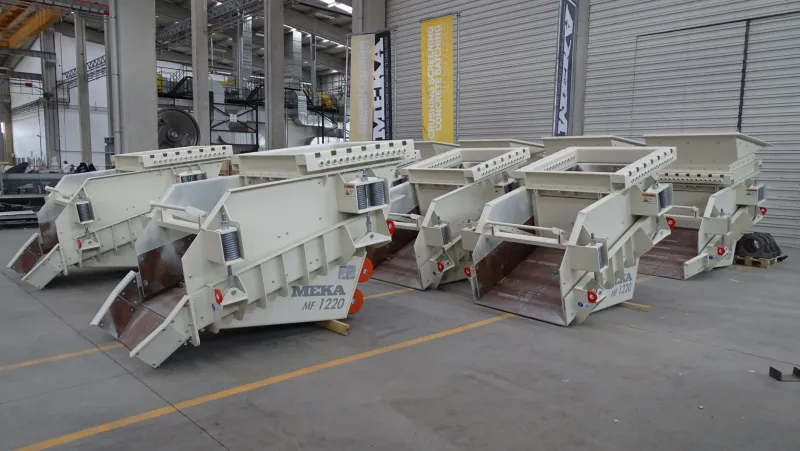
Precast concrete's centralized manufacturing model—particularly when sourced from facilities operating at industrial scale under rigorous quality management systems—addresses each of those risk vectors in a way that field-based CIP production structurally cannot.
For project managers building risk registers, procurement professionals structuring supply agreements, and owners evaluating construction delivery strategies, that alignment between precast's production model and the current risk environment represents a compelling case that extends well beyond the product itself.