Built to Last in Any Climate: How Indonesian Precast Concrete Stands Up to North American Environmental Demands
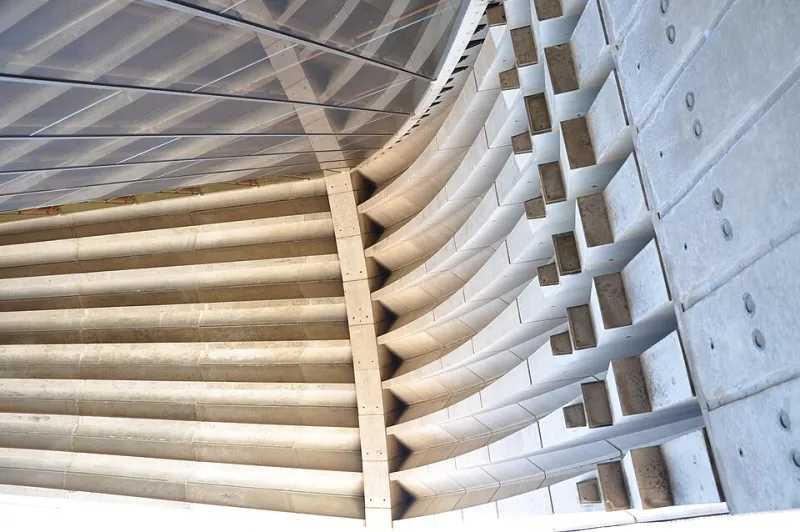
Photo: Jorge Láscar from Melbourne, Australia, CC BY 2.0, via Wikimedia Commons
When US engineers and procurement directors first consider sourcing precast concrete components from Southeast Asia, one concern tends to surface before questions about pricing, logistics, or lead times: will it hold up?
It is a fair question, and it deserves a rigorous answer rather than a sales assertion. North American construction environments impose genuine physical stressors on concrete structures—stressors that differ substantially from the tropical climate in which Indonesian precast facilities operate. A component that performs flawlessly in Surabaya must also perform in Minneapolis in February, in Miami's salt air, along California's seismic corridors, and in the path of Gulf Coast weather events. Understanding whether Indonesian-sourced precast concrete meets those demands requires looking at material science, testing standards, and documented field performance.
What North American Climates Actually Demand from Concrete
The United States presents a remarkably diverse set of environmental challenges for structural concrete. In the northern tier of states, freeze-thaw cycling is the primary durability concern. Water infiltrates the concrete matrix, expands upon freezing, and progressively degrades the paste structure through repeated thermal cycles. The American Concrete Institute's ACI 318 standard classifies exposure categories for freeze-thaw severity and mandates air-entrainment levels, water-to-cementite ratios, and minimum compressive strengths accordingly.
Along the Atlantic and Gulf coasts, chloride ion penetration from salt spray and marine groundwater drives corrosion of embedded steel reinforcement—a failure mechanism that is slow, invisible, and structurally catastrophic when it reaches critical thresholds. The Florida Department of Transportation, among other agencies, has developed some of the most stringent chloride resistance specifications in the world in direct response to documented infrastructure failures in coastal environments.
In the western United States, seismic performance governs structural design. Precast components in seismic design categories D, E, and F must demonstrate ductile connection behavior and energy dissipation capacity under lateral loading. The requirements under ASCE 7 and ACI 318 Chapter 18 for special moment frames and special structural walls are technically demanding and cannot be satisfied through material selection alone—they require deliberate detailing and manufacturing precision.
How Modern Indonesian Precast Manufacturing Addresses These Demands
The assumption that geographic origin determines material performance reflects an outdated understanding of how industrial precast manufacturing works. A precast facility in Indonesia that serves export markets operates under the same material science principles as any facility in the United States. The concrete mix design, not the factory's latitude, determines freeze-thaw resistance. The reinforcement detailing, not the country of origin, governs seismic performance.
At Sumber Precast Indonesia, mix designs for components destined for US markets are engineered to meet ACI 318 exposure category requirements. For freeze-thaw applications, this means air-entrained mixes with water-to-cementitious ratios at or below 0.45 and minimum compressive strengths of 4,500 psi—specifications that are not defaults but deliberate formulations based on the end-use environment documented in the project specifications.
For coastal applications, supplementary cementitious materials including fly ash and ground-granulated blast-furnace slag are incorporated at proportions that reduce permeability and chloride diffusion coefficients to levels consistent with 75-year service life expectations under AASHTO T 259 and ASTM C1202 (the Rapid Chloride Permeability Test). These are not proprietary claims—they are verifiable through third-party laboratory testing on production samples.
Testing Protocols: What Verification Actually Looks Like
The credibility of any durability claim rests on the testing methodology behind it. For US-bound precast components, the relevant testing framework draws from a combination of ASTM International standards, ACI committee guidance, and project-specific specification requirements.
Freeze-thaw resistance is evaluated through ASTM C666, which subjects concrete specimens to up to 300 rapid freeze-thaw cycles and measures dynamic modulus of elasticity degradation. Components intended for severe freeze-thaw exposure are formulated to maintain a relative dynamic modulus of at least 60 percent after 300 cycles—a threshold that indicates sufficient air-void system development and paste durability.
Chloride resistance testing under ASTM C1202 provides a rapid assessment of concrete's resistance to chloride ion penetration, expressed in coulombs. For marine and coastal applications, charge passed values below 1,000 coulombs are targeted, a threshold achievable through optimized supplementary cementitious material content and low water-to-cementitious ratios.
Compressive strength verification follows ASTM C39 protocols, with testing at 7-day and 28-day intervals on cylinder specimens cast from each production batch. Results are logged, retained, and available for review by the project's structural engineer of record as part of the quality documentation package that accompanies each shipment.
Seismic Detailing: A Design and Manufacturing Partnership
Seismic performance in precast concrete is not a material property—it is an engineering outcome. The ductility and energy dissipation capacity required in high-seismic zones are achieved through connection detailing, reinforcement configuration, and dimensional accuracy that allows field connections to perform as designed.
For projects in ASCE 7 Seismic Design Categories C through F, Sumber's engineering team works directly with the project's structural engineer of record during the shop drawing phase to ensure that connection details are manufacturable to the required tolerances and that embedded hardware meets ASTM A108 or equivalent specifications. Dimensional tolerances for structural precast components are held to PCI MNL-135 standards, which govern bearing lengths, insert locations, and bearing pad seat dimensions with precision that field-cast construction cannot reliably replicate.
Projects along California's coast and in the Pacific Northwest have incorporated Indonesian-sourced precast components for non-moment-frame applications including wall panels, stair systems, and utility vaults, with structural performance documented through project close-out inspections and in one case a post-event survey following a magnitude 4.8 seismic event in which no structural anomalies were identified.
Warranty Coverage and Long-Term Accountability
Durability claims are only meaningful when they are backed by warranty terms that assign accountability for long-term performance. Sumber Precast Indonesia provides written product warranties aligned with the service life expectations documented in project specifications, with warranty terms that remain valid regardless of the shipping distance between production facility and project site.
For US procurement teams, the practical implication is straightforward: geographic sourcing from Indonesia does not introduce warranty gaps or reduce the supplier's accountability for material performance. The same documentation, testing records, and warranty terms that would accompany a domestically produced component accompany every shipment from our facility.
Climate resilience is an engineering specification, not a postcode. When the specification is met and the testing data supports the claim, the origin of the component is irrelevant to its performance on a job site in Chicago, Charleston, or Los Angeles.