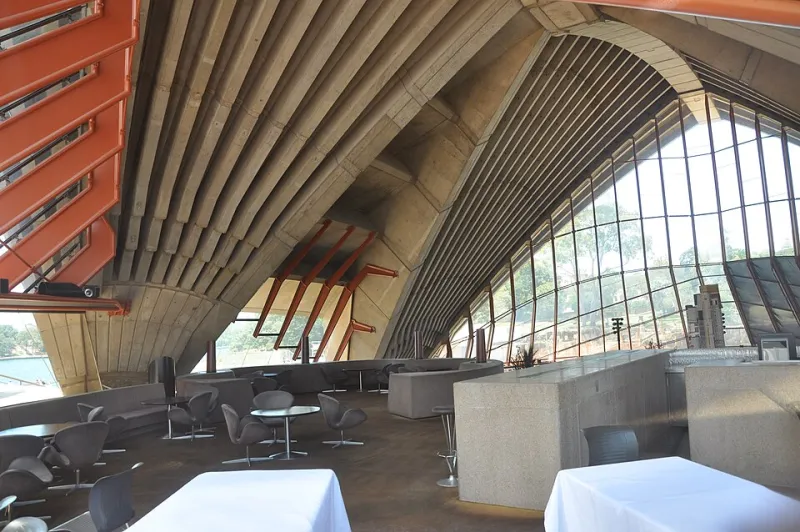
Across the Pacific: Why American Construction Firms Are Rethinking Where They Source Precast Concrete
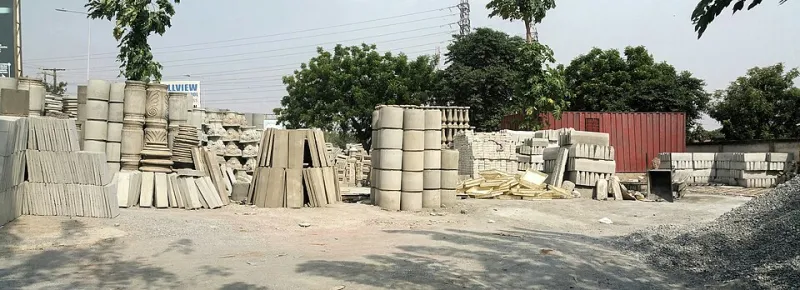
Photo: Kwabenabaop, CC BY-SA 4.0, via Wikimedia Commons
The Domestic Supply Problem No One Is Talking About
For decades, American contractors operated under a straightforward assumption: source locally, build faster, and avoid the complexity of international logistics. That model worked — until it didn't. Rising raw material costs, persistent labor shortages, and strained domestic production capacity have forced project managers across the country to reconsider what "reliable supply" actually means in today's construction climate.
The precast concrete sector, in particular, has felt this pressure acutely. Demand for precast components — from wall panels and hollow-core slabs to bridge beams and utility vaults — has surged alongside the infrastructure investment wave following the Infrastructure Investment and Jobs Act. Yet domestic manufacturers have struggled to keep pace, resulting in longer lead times, price premiums, and limited customization flexibility.
Enter Indonesia.
Why Indonesia? A Manufacturing Profile Worth Understanding
Indonesia is not a newcomer to large-scale concrete production. The country has spent the past two decades building one of Southeast Asia's most robust construction material manufacturing sectors, driven by enormous domestic infrastructure demand — highways, ports, urban transit systems, and commercial real estate development at a scale that rivals anything seen in the United States.
This sustained domestic demand has produced manufacturing facilities with serious production capacity, experienced engineering teams, and quality management systems that meet international benchmarks. Companies like Sumber Precast Indonesia have grown within this environment, developing technical capabilities that translate directly to the requirements of US-based projects.
The cost differential is compelling. Depending on the product type, specification complexity, and order volume, US contractors sourcing precast components from Indonesian suppliers can realize savings of 20 to 40 percent compared to equivalent domestic pricing. These figures account for freight, customs duties, and the logistical coordination involved in international procurement — meaning the net savings are genuine, not a headline number that evaporates once landed costs are calculated.
Quality Standards: The Question Every Procurement Team Asks First
The most common hesitation American contractors express about international sourcing is quality assurance. It is a fair concern, and one that deserves a direct answer.
Reputable Indonesian precast manufacturers operate under ISO 9001-certified quality management systems and produce components designed to meet ASTM International standards — the same technical benchmarks that govern domestic production. ASTM C39 for compressive strength testing, ASTM C150 for Portland cement specifications, and ASTM A615 for reinforcing steel are not foreign concepts to manufacturers like Sumber Precast. They are production requirements embedded in the manufacturing process from mix design through final inspection.
Beyond certification paperwork, leading Indonesian suppliers maintain in-house testing laboratories capable of documenting load performance, dimensional tolerances, and concrete mix consistency. Third-party inspection services — including internationally recognized firms with US operations — are routinely engaged to provide independent verification, giving American procurement teams the documentation trail they need for project compliance and owner confidence.
Navigating the Logistics: Shipping Precast Across the Pacific
Shipping large, heavy concrete components across the Pacific Ocean sounds daunting. In practice, it is a well-established logistics process that experienced suppliers handle routinely.
Indonesia's major manufacturing hubs have direct access to deep-water port facilities capable of handling heavy-lift cargo and standard container shipments. Precast elements are engineered for transport from the design phase, with lifting points, protective packaging, and stacking configurations specified to minimize transit risk. Transit times from Indonesian ports to major US West Coast terminals — Los Angeles, Long Beach, Seattle — typically run between 18 and 25 days, with East Coast delivery adding another week via intermodal rail.
The key to making international precast logistics work is early coordination. Contractors who integrate supplier lead times into their project schedules — rather than treating procurement as an afterthought — find that Indonesian sourcing fits comfortably within standard construction timelines, particularly for projects with planning horizons of six months or longer.
Sumber Precast Indonesia works directly with freight forwarders and US-based logistics partners to manage the documentation, customs clearance, and last-mile delivery coordination that can otherwise create friction for first-time international buyers.
Meeting US Building Codes: A Non-Negotiable Requirement
Building code compliance is not optional, and any serious international supplier understands that. Projects in the United States must meet International Building Code requirements, ACI 318 structural concrete standards, and any state or municipal amendments that apply to a given jurisdiction.
Indonesian manufacturers serving the US market design their products to these specifications by default, not as a customization. Structural calculations, reinforcement schedules, and connection details are prepared in formats familiar to American structural engineers, allowing seamless integration into project documentation packages.
For projects requiring seismic design compliance — particularly relevant in California, the Pacific Northwest, and Alaska — Indonesian suppliers with US market experience are equipped to produce components meeting the relevant seismic performance categories. This is not a theoretical capability; it reflects the technical depth that has developed among manufacturers who have been actively pursuing American partnerships for the past several years.
The Strategic Case for Diversifying Your Supply Chain
The construction industry learned hard lessons about supply chain concentration during the pandemic years. Contractors who relied on single-source domestic suppliers found themselves unable to meet project commitments when production disruptions hit. International sourcing, when executed with proper vetting and logistical planning, introduces a diversification layer that strengthens overall supply chain resilience.
This does not mean replacing domestic suppliers wholesale. The most effective procurement strategies combine domestic sourcing for time-sensitive, lower-volume needs with international sourcing for larger, planned-in-advance component packages where the cost and availability advantages are most pronounced.
Sumber Precast Indonesia is positioned to serve as exactly this kind of strategic partner — a manufacturer with the capacity, technical credentials, and US-market orientation to function as a reliable extension of an American contractor's supply chain. The Pacific is wide, but the value proposition has never been closer.
Starting the Conversation
For US contractors and procurement teams exploring Indonesian precast sourcing for the first time, the practical starting point is straightforward: request documentation. Ask for ISO certifications, ASTM compliance records, third-party inspection reports, and project references from previous international clients. A manufacturer with nothing to hide will provide all of this without hesitation.
Sumber Precast Indonesia welcomes that scrutiny. Transparency in technical documentation, pricing structure, and logistics planning is how we build the confidence that long-term supply relationships require. The trend of American firms looking east across the Pacific for precast solutions is not a passing moment — it is a structural shift in how the industry thinks about value, reliability, and what it means to build smart.