Vetting an Indonesian Precast Supplier: The Procurement Checklist Every US Importer Needs

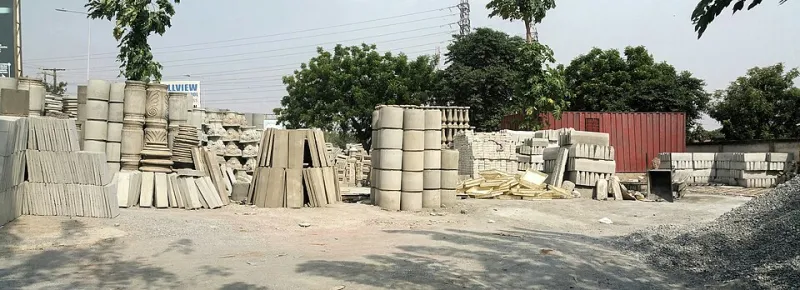
Photo: doe-oakridge, Public domain, via Wikimedia Commons
Before You Request a Quote, Build Your Evaluation Framework
The decision to source precast concrete from an international supplier is a significant procurement commitment. Unlike commodity materials where substitution is simple, precast concrete components are engineered to specific structural requirements, dimensional tolerances, and code compliance standards. A supplier evaluation process that focuses primarily on price without systematically assessing technical capability and quality management is a process that carries serious project risk.
The following checklist is designed for procurement managers, project engineers, and supply chain professionals who are conducting due diligence on Indonesian precast manufacturers for US construction projects. It is organized around five core evaluation areas: quality management systems, technical compliance, production capability, documentation practices, and logistics readiness.
Use it as a structured conversation guide during supplier interviews, and do not move forward with any supplier who cannot provide satisfactory responses across all five areas.
Area 1: Quality Management Systems
☐ ISO 9001 Certification — Current and Verifiable
Request the actual certificate, not a reference to it. Verify the certification body is an accredited third-party registrar (look for IAF-recognized accreditation bodies). Confirm the certificate scope covers precast concrete manufacturing specifically, and check the expiration date. An expired or narrowly scoped certificate is a red flag.
☐ Internal Quality Control Procedures
Ask for a summary of the supplier's internal QC process from raw material intake through finished product release. A credible manufacturer will have documented procedures for incoming material inspection, mix design verification, pour documentation, curing monitoring, and final dimensional inspection. If these exist only informally, the quality system is not reliable.
☐ Non-Conformance and Corrective Action Records
This is a question few procurement teams think to ask, but it is one of the most revealing. Request examples of how the supplier identifies, documents, and resolves non-conforming product. A manufacturer with a mature quality system will have clear records. One without them either has no defects (unlikely) or no system for catching them (concerning).
☐ Third-Party Inspection Availability
Confirm whether the supplier has experience working with internationally recognized third-party inspection firms — Bureau Veritas, SGS, Intertek, and similar organizations all have operations in Indonesia. A supplier comfortable with external inspection is a supplier confident in their own processes.
Area 2: Technical Compliance with US Standards
☐ ASTM Material Standards Compliance
For precast concrete destined for US projects, the following ASTM standards are foundational:
- ASTM C39: Standard Test Method for Compressive Strength of Cylindrical Concrete Specimens
- ASTM C150 / C150M: Standard Specification for Portland Cement
- ASTM A615 / A615M: Standard Specification for Deformed and Plain Steel Bars for Concrete Reinforcement
- ASTM C1077: Standard Practice for Agencies Testing Concrete and Concrete Aggregates
Ask the supplier to confirm familiarity with each standard and request sample test reports demonstrating compliance. The reports should include test dates, specimen identification, testing personnel, and results — not just summary conclusions.
☐ ACI 318 Structural Design Compatibility
Structural precast components used in US buildings must be designed in accordance with ACI 318, the American Concrete Institute's building code requirements for structural concrete. Confirm that the supplier's engineering team is familiar with ACI 318 and can produce or review structural calculations in this framework. If the supplier works exclusively with Indonesian national standards (SNI), additional engineering review may be required on the US side.
☐ Seismic Design Capability
For projects in seismic design categories C through F — which covers most of California, the Pacific Northwest, and parts of the Mountain West — precast components must meet specific ductility and connection requirements. Ask directly whether the supplier has produced components for seismic applications and request documentation from those projects.
☐ Dimensional Tolerance Standards
Request the supplier's stated dimensional tolerances for the product types you are sourcing, and compare them against PCI (Precast/Prestressed Concrete Institute) MNL-135 tolerances, which are the US industry benchmark. Suppliers targeting the US market should be familiar with PCI standards even if they are not PCI-certified.
Area 3: Production Capability Assessment
☐ Plant Capacity and Current Order Load
A supplier's theoretical capacity means less than their available capacity at the time of your project. Ask for current production utilization rates and confirm that your order volume can be accommodated within your required delivery window. Suppliers operating at or near full capacity may not be able to commit to your timeline reliably.
☐ Equipment and Facility Inspection
Whenever possible, arrange a facility visit — either in person or via a third-party inspection service. Key items to observe include the condition and calibration of batching equipment, the curing environment (steam curing systems, covered curing areas), the condition of forms and molds, and the organization of the finished product storage yard. A well-maintained, organized facility is a reliable indicator of operational discipline.
☐ Mix Design Documentation
Request concrete mix designs for the product types you are sourcing, including water-to-cement ratios, admixture specifications, and aggregate source documentation. Mix designs should be supported by historical strength test data demonstrating consistent performance over time.
☐ Prestressing Capability (If Applicable)
For hollow-core slabs, bridge beams, and other prestressed products, confirm that the supplier has calibrated prestressing equipment, documented tensioning procedures, and strand certification records. Prestressed concrete production involves additional technical complexity that not all precast manufacturers are equipped to handle.
Area 4: Documentation and Traceability
☐ Product Marking and Traceability Systems
Each precast element delivered to your project should be individually identifiable and traceable to its production batch, mix design, pour date, and quality records. Ask how the supplier marks and tracks individual components, and confirm that this information will be available to your project team upon delivery.
☐ Mill Certifications for Steel Reinforcement
All reinforcing steel used in your components should be accompanied by mill certifications verifying chemical composition and mechanical properties. These documents are standard requirements for US structural projects and should be provided as a matter of course.
☐ Concrete Strength Test Reports
For each production batch, request 28-day compressive strength test reports. These should show individual specimen results, not just averages, and should be signed by a qualified testing technician.
☐ Export Documentation Readiness
Confirm that the supplier is experienced with export documentation requirements for US-bound shipments, including commercial invoices, packing lists, certificates of origin, and any product-specific certifications required by US Customs and Border Protection.
Area 5: Logistics Readiness
☐ Port Access and Shipping Experience
Verify that the supplier's manufacturing location has practical access to a port facility capable of handling the cargo type and volume you require. Ask for references from previous US export shipments and confirm familiarity with the specific loading and securing requirements for precast concrete cargo.
☐ Packaging and Transit Protection
Precast components must be packaged and secured to withstand ocean transit without surface damage or structural compromise. Request the supplier's standard packaging specifications and ask for photographs from previous shipments. Inadequate packaging that results in damaged components is a cost and schedule problem that lands entirely on the importer.
☐ Lead Time Commitments in Writing
Verbal lead time estimates are not procurement commitments. Require written confirmation of production start dates, production completion dates, and estimated vessel departure dates. Build contractual provisions for delay notification and compensation into your purchase agreement.
A Final Note on Red Flags
Certain responses during the supplier evaluation process should prompt immediate caution. These include reluctance to provide third-party inspection access, inability to produce historical test data, vague answers about ASTM compliance, and pressure to finalize orders before documentation review is complete.
Sumber Precast Indonesia approaches every procurement inquiry with full documentation transparency. We provide ISO certifications, ASTM-referenced test reports, mix design records, and third-party inspection coordination as standard elements of our supplier qualification process — because we understand that informed buyers make better long-term partners. The checklist above reflects the standard we hold ourselves to, and the standard we encourage every US importer to apply consistently.