Designed to US Standards, Built with Indonesian Precision, Verified by American Eyes: The Case for Dual-Jurisdiction Precast Engineering

There is a persistent assumption in American construction circles that proximity guarantees quality—that a structural component made closer to the project site is inherently more trustworthy than one manufactured across an ocean. It is an understandable instinct. It is also, increasingly, an outdated one.
The global manufacturing landscape has changed substantially over the past two decades. Indonesia, in particular, has developed a precast concrete manufacturing sector that combines advanced production technology, rigorous process discipline, and significant cost efficiency. When that capability is paired with US engineering standards on the front end and American third-party inspection on the back end, the result is not a compromise—it is a structural upgrade over conventional domestic procurement for many project types.
Why the Skepticism Exists—and Why It Deserves a Direct Answer
Quality skepticism about internationally sourced construction materials is not irrational. It reflects real historical experiences with inconsistent overseas production, documentation gaps, and the practical difficulty of resolving defects discovered after components cross international borders.
Those concerns are legitimate. They are also precisely what a well-designed dual-jurisdiction procurement model is built to eliminate.
The core principle is straightforward: the engineering specification never leaves American jurisdiction. Components for a US stadium, hospital wing, or bridge deck are designed by licensed US structural engineers, specified to applicable American codes—ACI 318 for structural concrete, AASHTO for bridge elements, PCI standards for precast manufacturing tolerances—and documented in contract language that is enforceable under US law. The manufacturer's obligation is to meet those specifications. The verification that they have done so is performed by independent American inspection parties, either on-site in Indonesia during production or upon arrival at the US port of entry, or both.
This is not a novel concept. It is the same framework that governs steel fabrication in South Korea for American projects, curtain wall manufacturing in China for US high-rises, and mechanical equipment production across a dozen countries for domestic infrastructure. The construction industry has been sourcing engineered components internationally for decades. Precast concrete is simply arriving at that maturity later than other product categories.
The Indonesian Manufacturing Advantage
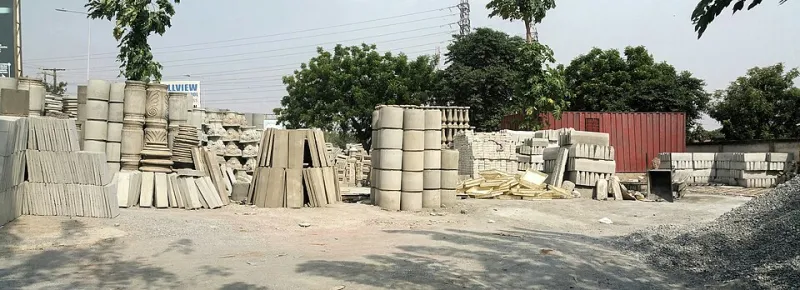
Indonesia's precast concrete sector has invested heavily in production infrastructure over the past fifteen years. Facilities operating at the scale and quality level relevant to export markets utilize automated batching systems, computer-controlled curing environments, and dimensional verification equipment that exceeds what is available at many domestic precast yards.
The workforce training culture in Indonesia's formal manufacturing sector prioritizes process adherence and documentation discipline—attributes that translate directly into the kind of consistent quality records that US project owners and their insurers require. Production documentation, mix design records, compressive strength test results, and dimensional inspection reports are generated as a matter of standard operating procedure, not as a response to exceptional requests.
Labor cost differentials remain significant. For large, repetitive precast programs—stadium seating tiers, hospital corridor panels, bridge beam series—the production economics of Indonesian manufacturing can deliver 20–35% cost savings on the manufactured component value without any reduction in technical specification. On a $30 million precast scope, that differential is a meaningful budget lever.
What American Third-Party Verification Actually Looks Like
The verification layer is where the dual-jurisdiction model earns its credibility, and it deserves more detailed examination than it typically receives in procurement discussions.
American inspection firms—many operating under the National Institute of Building Sciences framework or accredited by the Precast/Prestressed Concrete Institute—can embed inspectors within Indonesian production facilities for the duration of a project's manufacturing run. These inspectors review mix designs against specification requirements, witness compressive strength testing at defined cure intervals, perform dimensional checks against approved shop drawings, and review surface finish and reinforcement placement before units are approved for shipment.
This is not a theoretical safeguard. It is a documented, contractually defined inspection protocol with hold points—stages at which production cannot advance without inspector sign-off. The resulting inspection record travels with every shipment and provides the project owner with a paper trail of quality evidence that many domestically sourced precast programs cannot match.
Additional verification occurs at the US port of arrival and, where project specifications require it, on-site before installation. The cumulative inspection density of this model frequently exceeds what a typical domestic precast procurement achieves.
Megaproject Applications: Where the Model Performs Best
The dual-jurisdiction approach delivers its greatest advantages on large, complex, schedule-sensitive projects where design repetition, production volume, and technical precision intersect.
Consider a major sports venue requiring 4,000 precast seating units of standardized geometry. Domestic precast capacity for a program of that scale may be limited, requiring multiple suppliers with varying quality systems and creating coordination complexity. A single Indonesian facility with the production capacity to handle the full program under a unified quality management system offers both supply certainty and quality consistency that a fragmented domestic approach cannot.
For hospital construction, where structural tolerances directly affect mechanical, electrical, and plumbing rough-in precision, factory-controlled precast manufacturing under US-specified tolerances—verified by American inspectors—delivers dimensional predictability that reduces coordination risk during installation.
Bridge infrastructure, where AASHTO-compliant prestressed girders must meet precise camber and dimensional requirements, represents another natural application. Indonesian manufacturers producing to AASHTO specifications under American inspection oversight have successfully supplied bridge components for projects in Southeast Asia and Australia, establishing a track record that is directly transferable to North American procurement frameworks.
Reframing the Risk Calculus
The conventional risk narrative around international precast sourcing focuses on what could go wrong: shipping delays, documentation errors, quality deviations discovered late. Those risks are real and require active management.
But the risk calculus has another side that rarely receives equivalent attention. Domestic precast procurement carries its own risk profile: capacity constraints that push delivery timelines, quality variability across regional suppliers, labor disruptions, and the absence of systematic third-party inspection on many projects.
When the dual-jurisdiction model is properly structured—US specifications, Indonesian precision production, American verification—it does not merely match the risk profile of domestic procurement. It often improves on it by introducing a level of documentation rigor and inspection density that becomes a genuine project asset.
The question for American infrastructure owners, project managers, and procurement professionals is not whether international precast sourcing is inherently riskier. It is whether the risk management framework around that sourcing is adequate. When it is—and the tools to make it so are well established—the dual-jurisdiction model represents one of the most technically defensible and economically compelling options available for large-scale precast programs.