Ductile by Design: What US Seismic Codes Demand of Precast — and How Indonesian Fabricators Deliver It
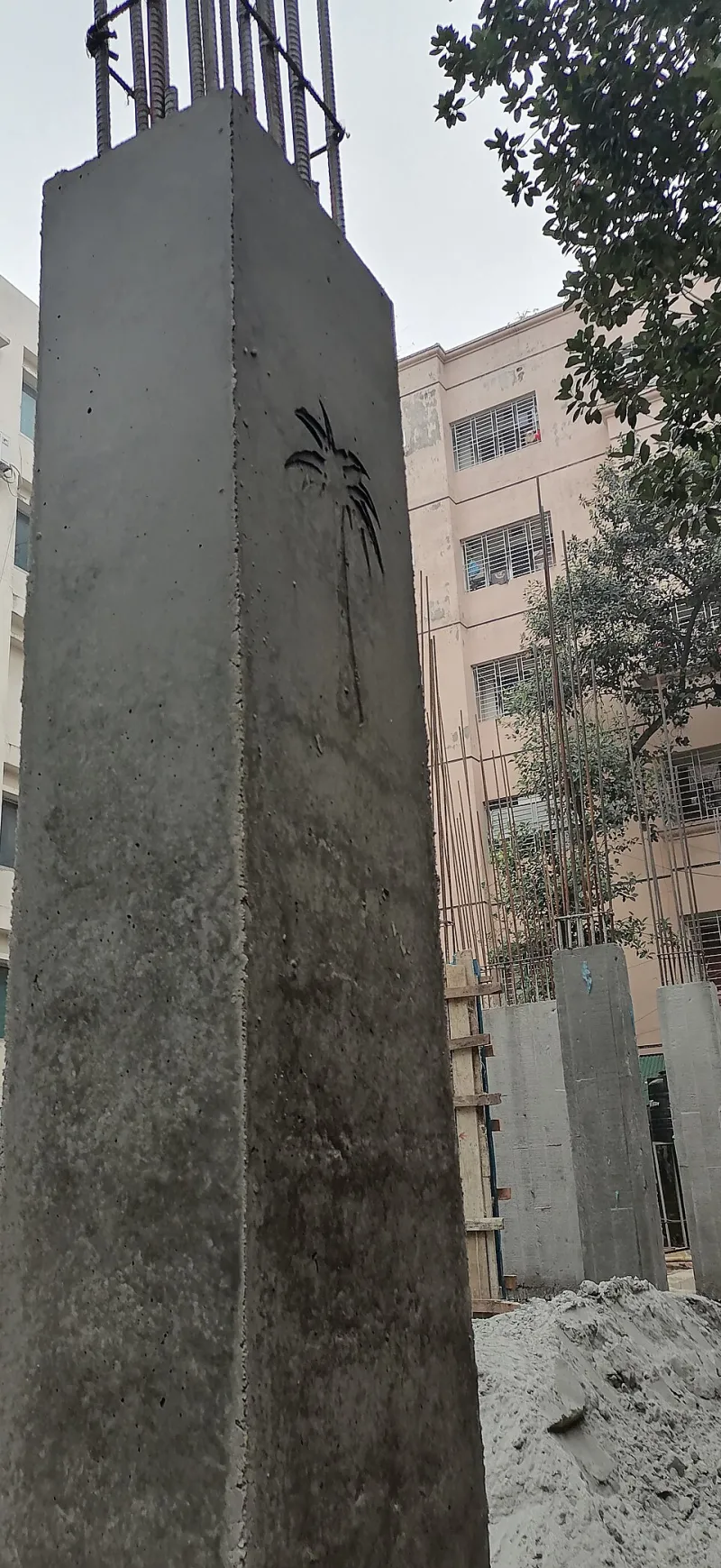
Photo: Faa Noa, CC BY-SA 4.0, via Wikimedia Commons
Most discussions of seismic design end at the structural engineer's desk. That is a mistake. In precast construction, the gap between a frame that behaves the way it was modeled and one that does not is opened months later, on a casting bed, by the crews who position rebar, set embeds, and place the strand. Codes describe intent. Plants determine outcome.
For US projects in high-hazard regions, the question is therefore not simply whether a supplier can pour concrete to a tolerance. It is whether that supplier can hold a ductile detailing scheme intact through fabrication, handling, shipping across the Pacific, and erection. Indonesia's precast sector has spent the better part of two decades answering that question for its own seismic market, and the capability now travels.
Two Coasts, Two Load Cases
American specifiers rarely deal with a single seismic condition. A project in Los Angeles or the Bay Area sits close to active fault systems with strong near-field ground motions, and the governing documents are typically ASCE 7 with ACI 318 Chapter 18 detailing for Seismic Design Categories D through F. A project in Seattle or Portland faces the Cascadia subduction zone, where the concern is long-duration shaking, basin amplification, and liquefaction-driven lateral spread rather than a single sharp pulse.
The two environments produce different demands on a precast frame. Near-field motions stress connection ductility and joint confinement over a small number of large cycles. Long-duration subduction shaking accumulates damage across many more cycles and places a premium on the stability of the gravity system once the lateral system has yielded. A manufacturer who has only ever produced for one of these profiles is not automatically qualified for the other — but a manufacturer whose native market includes both high seismicity and soft-soil amplification generally arrives with the detailing vocabulary already in place.
Ductility Is Manufactured, Not Specified
A ductile precast frame is usually an emulative one: it is detailed so that its inelastic behavior occurs in locations the engineer has chosen, replicating what a monolithic cast-in-place frame would do. In practice this means plastic hinges are deliberately relocated into a defined joint region, and the fabrication of that region becomes the single most consequential activity in the plant.
The mechanisms vary. Grouted splice sleeves in column and beam-column connections, qualified under ACI 550 provisions and evaluated through ICC Evaluation Service reports, allow mild reinforcement to develop continuously across a joint. Post-tensioned rocking connections with replaceable energy-dissipating elements offer a different route, concentrating damage in components that can be inspected and swapped after an event. Hybrid systems combine both. Each demands its own quality regime, and none tolerates improvisation at the form.
What separates a competent fabricator from a merely compliant one is the willingness to build the joint — physically, at full scale, before it is built in the field.
The Plant Record That Makes Performance Verifiable
Ductility claims are only as credible as the documentation behind them. A supplier serving US seismic work should be able to produce, without prompting, a chain of evidence that includes:
- Material traceability from mill certificates through strand certification to the delivered element, with heat numbers matched to placement records.
- Sleeve and grout qualification, including test reports reflecting the specific product and the specific installation procedure, not a generic manufacturer bulletin.
- Dimensional verification before and after pour, measured against PCI tolerances and the project's own erection scheme, not only against a nominal drawing.
- Concrete performance data from cylinders cured under conditions that reflect the plant's actual environment, sampled at a frequency the engineer of record has approved.
- A full-scale mock-up of at least one critical connection, assembled, inspected, and — where the specification allows — tested, with the results retained.
- Handling and temporary stress design, because a panel that is perfect in the yard and cracked in the hold has already failed.
None of this is exotic. It is simply expensive to do consistently, which is precisely why it functions as a filter.
Where Precast Earns Its Place in a Seismic System
Precast is not automatically the right answer for every lateral system, and responsible suppliers say so. But in several configurations it carries structural arguments that cast-in-place cannot easily match.
Material consistency. Plant batching, controlled curing, and mechanized placement reduce the variability that field conditions introduce. In a seismic frame, unpredictable strength is a liability in both directions — too weak to resist, too strong to yield where intended.
Diaphragm performance. Precast floor systems with structural topping, properly detailed chords and collectors, and disciplined shear transfer at the joints give engineers a diaphragm whose behavior can be predicted with unusual confidence, because the units themselves were produced under a single set of conditions.
Inspectability. A connection that is assembled and grouted on site can be verified, re-verified, and — critically for post-event assessment — reopened or radiographed. Emulative detailing turns seismic damage into something an owner can actually examine.
Schedule certainty in the foundation phase. A high-seismic site often carries ground improvement, dewatering, and shoring risk. Moving structural production to a plant decouples the superstructure schedule from ground conditions, which is a risk argument as much as a speed argument.
What US Specifiers Should Put in the Documents
The specification is where most offshore seismic risk is either controlled or lost. Four clauses do disproportionate work: require the engineer of record's review of the plant's quality control plan before the first element is cast; require full-scale mock-up assembly of the governing connection with documented dimensional and grout-placement verification; require that the shipper's handling analysis be signed and submitted; and require that all connection-related test reports travel with the shipment rather than follow it.
Precast engineering for seismic regions is a discipline of continuity — the design intent has to survive the form, the truck, the ship, and the crane. Manufacturers who can demonstrate that continuity, element by element, are the ones worth specifying.
To discuss seismic detailing requirements for an upcoming US project, contact the Sumber Precast Indonesia engineering team.